Spinning up Ubuntu VMs on Proxmox is straightforward, but doing it repeatedly through the web UI gets old fast. Too many clicks, easy to miss a setting, and hard to keep things consistent.
This guide walks through a Bash script that automates the entire process. It creates an Ubuntu cloud-init VM with sensible defaults, handles networking, validates inputs, and boots the VM ready for SSH — all from the command line.
It’s designed for people who want simple, repeatable, predictable VM creation.
Quick start (run as root on the Proxmox host)
wget https://raw.githubusercontent.com/cfunkz/Proxmox-Cloud-Init/main/start-vm chmod +x start-vm
./start-vm
Full script and updates live here: 👉 https://github.com/cfunkz/Proxmox-Cloud-Init
What this script handles for you
At a high level, the script automates everything you’d normally click through in the Proxmox UI:
- Downloads the Ubuntu cloud image automatically (Ubuntu Noble by default)
- Validates all inputs (VMID, storage, IP addresses)
- Creates the VM with modern defaults (UEFI, VirtIO, QEMU guest agent)
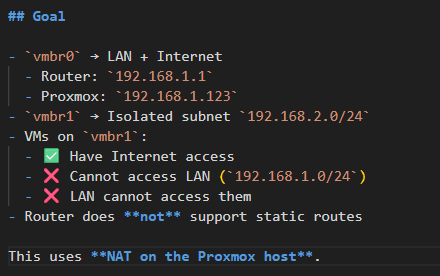
- Supports DHCP or static networking
- Configures cloud-init user and password
- Optionally injects SSH public keys
- Resizes the disk to your chosen size
- Starts the VM and removes temporary files
- Prints final SSH connection details
The goal is simple: no surprises and no half-configured VMs.
Why automate VM creation on Proxmox?
The Proxmox UI works fine for one-off VMs. It’s less great when you need to:
- spin up multiple machines quickly
- keep configs consistent across environments
- avoid human error
- document your setup as code
This script turns VM creation into a guided, interactive workflow. You answer a few prompts, and the script runs all the required qm commands in the correct order.
Script walkthrough
Below is a breakdown of the more important parts of the script and why they exist.
Strict mode and error handling
set -euo pipefail
This enables Bash “strict mode”:
- exit immediately on errors
- fail on undefined variables
- catch failures inside pipelines
It prevents the script from silently continuing when something goes wrong.
die() { echo "ERROR: $*" >&2; exit 1; }A small helper used throughout the script to print errors clearly and exit cleanly.
need() {
  command -v "$1" >/dev/null || die "Missing: $1"
}
Before doing anything useful, the script checks for required tools like qm and wget. If something’s missing, it fails early instead of halfway through VM creation.
Prompting for input (with sane defaults)
prompt_default() {
  local q="$1" d="$2" __v="$3" a
  read -rp "$q [$d]: " a
  printf -v "$__v" "%s" "${a:-$d}"
}
This helper prompts the user with a default value. If Enter is pressed, the default is used. Using printf -v avoids subshells and keeps everything clean.
prompt_required() {
  local q="$1" __v="$2" a
  while [[ -z "${a:-}" ]]; do
    read -rp "$q: " a
  done
  printf -v "$__v" "%s" "$a"
}
Same idea, but for required fields. This is used for things like VMID, where an empty value isn’t acceptable.
Input validation
is_ipv4() {
  local ip="$1"
  [[ "$ip" =~ ^([0-9]{1,3}\.){3}[0-9]{1,3}$ ]] || return 1
  IFS='.' read -r a b c d <<<"$ip"
  for o in "$a" "$b" "$c" "$d"; do
    [[ "$o" -ge 0 && "$o" -le 255 ]] || return 1
  done
}
IP validation happens in two stages:
- a regex checks the format
- each octet is verified to be between 0–255
It’s simple, readable, and catches bad input early.
VM configuration
prompt_required "VMID (numeric)" VMID
[[ "$VMID" =~ ^[0-9]+$ ]] || die "VMID must be numeric"
qm status "$VMID" &>/dev/null && die "VMID $VMID already exists"
The script ensures the VMID is numeric and not already in use. Output from qm status is discarded because only success or failure matters here.
prompt_default "Storage" "local-lvm" STORAGE
pvesm status | awk 'NR>1 {print $1}' | grep -qx "$STORAGE" || die "Storage '$STORAGE' not found"
Storage is validated against existing Proxmox storage pools to avoid typos that would otherwise fail later.
Network setup (DHCP or static)
read -rp "Use DHCP? (y/N): " USE_DHCP
USE_DHCP="${USE_DHCP,,}"
User input is normalized to lowercase for easier comparison.
If DHCP is selected:
IPCONFIG0="ip=dhcp"Otherwise, the script prompts for static values and builds a proper cloud-init network string:
IPCONFIG0="ip=${IP_ADDR}/${CIDR},gw=${GATEWAY}"This same variable is reused later when configuring cloud-init.
Image download and VM creation
wget -q --show-progress -O "$IMG_PATH" "$IMG_URL" || die "Download failed"
[[ -s "$IMG_PATH" ]] || die "Image file empty"
The cloud image is downloaded with progress output and checked to ensure it isn’t empty or corrupted.
qm create "$VMID" \
  --name "$VMNAME" \
  --memory "$MEM" \
  --cores "$CORES" \
  --cpu host \
  --machine q35 \
  --bios ovmf \
  --scsihw virtio-scsi-pci \
  --net0 "virtio,bridge=$BRIDGE" \
  --agent enabled=1 \
  --serial0 socket \
  --vga serial0
This creates the VM with:
- UEFI boot
- VirtIO drivers
- host CPU passthrough
- QEMU guest agent enabled
- serial console access
These defaults work well for most modern workloads.
Disk and cloud-init setup
qm importdisk "$VMID" "$IMG_PATH" "$STORAGE" --format raw
qm set "$VMID" --scsi0 "${STORAGE}:vm-${VMID}-disk-0,discard=on,iothread=1"
The cloud image is imported and attached as the primary disk. TRIM and I/O threading are enabled for better performance.
qm set "$VMID" --ide2 "$STORAGE:cloudinit"Adds the cloud-init drive where Proxmox stores user and network data.
Cloud-init configuration
qm set "$VMID" \
  --ciuser "$CIUSER" \
  --cipassword "$CIPASS" \
  --ipconfig0 "$IPCONFIG0"
User, password, and networking are applied in one step.
if [[ "$USE_DHCP" != "y" ]]; then
  qm set "$VMID" --nameserver "$DNS"
fi
DNS is only set for static configurations. DHCP handles it automatically.
if [[ -n "$SSHKEY_LINE" ]]; then
  qm set "$VMID" --sshkeys <(echo "$SSHKEY_LINE")
fi
SSH keys are injected using process substitution, avoiding temporary files entirely.
Startup and cleanup
qm resize "$VMID" scsi0 "$DISK_SIZE"
qm set "$VMID" --boot order=scsi0
qm start "$VMID"
rm -f "$IMG_PATH"
The disk is resized, boot order set, the VM started, and the downloaded image cleaned up.
Final thoughts
If you spend time clicking through the UI or retyping the same qm commands, this approach saves time and avoids mistakes while still being transparent and easy to modify.